
Special Exhibition: All the Time in the World
|
From 28.03.2026 until 08.11.2026 |
|
Daily from 10am-6pm |
|
Adults (from age 16 and up) |
|
10.- |
€ |
|
Children under 6 |
free |
||
|
Children and youth
|
5,00.- |
€ |
- Various guided tours
- Programmes to join in
- Materials for teacher
- Information and Registration

All rooms in the museum have barrier-free access.
No entry for animals.

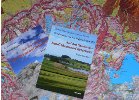
Franz Feistl
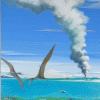
For many years the painter from Aschau in Chiemgau, Franz Feistl, has been a friend of the Museum..
W. Angerer der Jüngere
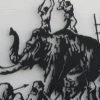
The renowned artist Walter Angerer der Jüngere lives in Siegsdorf and is well known for his sculptures in the so called "Fraßbildtechnik" – a technique using feeding pattern traces of certain beetles...
Karin Wein
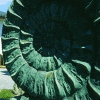
Karin Wein is a sculptress living in Siegsdorf.. Her works can be seen at central locations in the town...
Special Exhibition 2026

Special Exhibition 27.12.2025-08.11.2026
© Foto: ESA/HUBBLE & NASA
ALL THE TIME IN THE WORLD – From the Big Bang to the time
From December 27, 2025, to November 8, 2026
Time determines our lives. Almost all of us live by the clock day in, day out – according to appointments and deadlines. We take it for granted that days, weeks, months, and years pass by – and in doing so, we become aware of the fact that our own lifetime is limited. Time is therefore something very ordinary, something that affects us all directly and yet is difficult or impossible to grasp or explain. The exhibition “All the Time in the World” is dedicated to this multifaceted topic and has enlisted the renowned astrophysicist and science journalist Harald Lesch to accompany our visitors on their journey through time and space. Numerous exhibits, spectacular images and displays, as well as interactive objects and special children's stations, make the exhibition an experience for young and old alike.
A journey through time and space. The exhibition first takes us back to the beginning of all things – the Big Bang 13.8 billion years ago. This is not only the birth of the universe, which has been expanding ever since, but also the beginning of time itself.
- and T.A. Rector (NRAO)_300.jpg)
┬® NASA- NOAO- ESA- the Hubble Helix Nebula Team- M. Meixner (STScI)- and T.A. Rector (NRAO)
The history of the Earth, which was formed around 4.55 billion years ago, is the subject of the second part of the exhibition.
Geological processes and their duration are illustrated by numerous exhibits, showing how the Earth is still undergoing constant change today.
Fossils take us on a journey through different periods of Earth's history and show how life has also been constantly changing since its emergence
around 3.8 billion years ago.

┬® FWC Reserarch- myfwc_flickr.com - Otolith
In the end, we too will not be able to answer the question “What is time?” definitively. It is and remains a great mystery, and no matter what we do, we cannot escape its effects. But it is also what keeps the world going...
We look forward to You!